Read Time: 9 min
Whether you navigate daily commutes down Route 222 in a Chevrolet Silverado, coordinate family carpools across Lititz in a GMC Yukon, travel through Ephrata in a Buick Enclave, or cruise Lancaster in a Cadillac Escalade, General Motors vehicles represent a major presence on Lancaster County roadways.
Modern GM trucks, SUVs, and luxury sedans are precision-engineered vehicles built with advanced metallurgy, targeted crumple zones, and sensitive crash-avoidance technology. When an unexpected collision occurs along Route 30 or a rural backroad, restoring these vehicles to their original safety benchmarks requires specialized equipment, structural factory procedures, and certified technical training.
Understanding what goes into factory-certified collision repair allows you to protect your investment, maintain your factory warranty, and ensure your vehicle will protect your family in any future collision.
TL;DR / Quick Summary
GM-certified collision repair ensures Chevrolet, GMC, Buick, and Cadillac vehicles are restored using genuine OEM parts, calibrated frame equipment, squeeze-type resistance spot welding, and verified factory repair procedures.
Key Takeaways:
- Preserves Crash Safety: Restores high-strength steel crumple zones and structural integrity to original factory crash-test standards.
- Protects Manufacturer Warranties: Genuine GM parts and approved procedures keep vehicle rust-through and safety warranties fully intact.
- Accurate ADAS Calibration: Certified diagnostic scanning and sensor alignment ensure features like Super Cruise and automatic emergency braking function correctly.
- Maintains Resale Value: Documented OEM repair records and computerized waterborne color matching prevent trade-in depreciation.
What GM Collision Certification Demands of a Body Shop
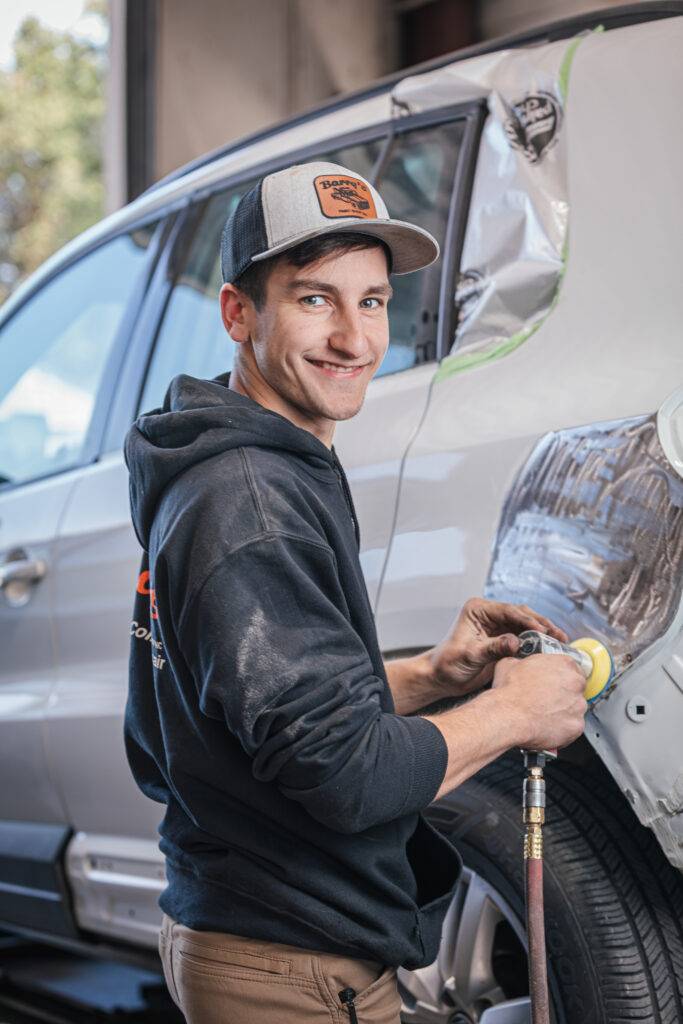
General Motors maintains strict, non-negotiable operational requirements before awarding certified status to an independent collision repair facility. A certified shop must continuously demonstrate capability across several core areas:
- I-CAR Gold Class® Status & GM-Specific Training: Technicians must complete comprehensive training on GM electrical systems, unibody construction, and lightweight structural alloys.
- Computerized 3D Frame Measuring Systems: Unibody and full-perimeter truck frames must be realigned on approved benches with laser measuring systems accurate to within millimeters of factory blueprints.
- Squeeze-Type Resistance Spot Welding (STRSW): Certified facilities must utilize factory-grade inverter welders that replicate the exact electrical current and clamp pressure used on the original GM assembly line.
- Direct Access to GM Technical Repair Procedures: Technicians repair vehicles by following step-by-step OEM technical manuals directly from General Motors engineers rather than relying on generic bodywork methods.
- Mandatory Pre- and Post-Diagnostic Scanning: Facilities must scan all onboard vehicle computers before teardown and after reassembly to confirm no underlying electronic faults remain.
What Makes Modern GM Vehicles Unique to Repair?
The materials and technologies that make modern GM vehicles safe, fuel-efficient, and quiet also make them significantly more complex to repair following a crash.
Advanced High-Strength Steels (AHSS) and Boron Alloys
Modern GM platforms, particularly the GMT T1XX truck architecture supporting the Chevy Silverado and GMC Sierra, extensively utilize Boron steel and ultra-high-strength alloys in the passenger safety cage, A-pillars, and B-pillars.
These metals cannot be straightened or heated like traditional mild steel. Applying heat to ultra-high-strength steel fundamentally alters its molecular grain structure, causing it to become brittle and weak. GM repair standards mandate precise sectioning locations and complete component replacement when structural pillars are damaged.
Mixed-Material and Lightweight Aluminum Panels
To shed weight without compromising durability, GM incorporates aluminum hoods, front fenders, tailgates, and structural suspension towers across its truck and luxury vehicle lineup.
Repairing aluminum requires dedicated, isolated workstations and non-ferrous hand tools. If steel dust comes into contact with bare aluminum during bodywork, galvanic corrosion occurs under the paint finish, leading to bubbling and structural panel degradation over time.
Integrated Safety Architecture (Chevy Safety Assist, GMC Pro Safety Plus & Cadillac Super Cruise)
From forward collision alert cameras mounted behind the rearview mirror to radar sensors positioned behind front bumper covers, GM vehicles rely on intricate sensor arrays.
Even a low-speed parking lot impact can shift a radar bracket by a single degree. At highway speeds, that slight angle causes blind-spot monitors to misjudge adjacent lanes or lane-keep systems to drift. Certified repair includes precise static target alignments and dynamic on-road calibrations to ensure these active driver-assistance systems operate reliably.
The Costly Consequences of Non-Certified Repairs and Aftermarket Parts
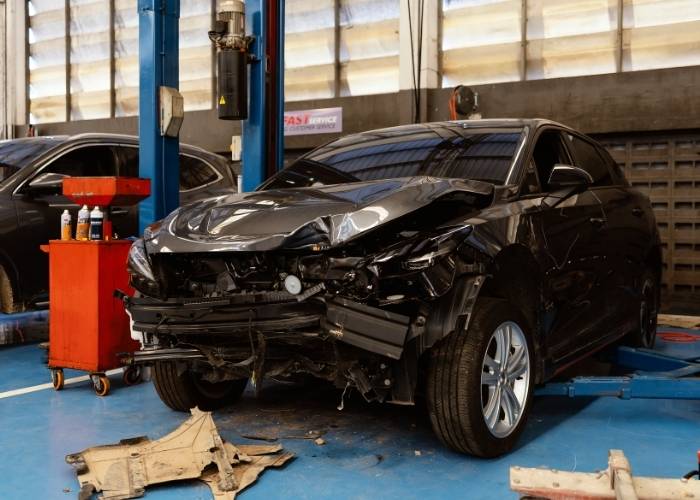
Choosing a non-certified repair facility or allowing an insurer to mandate imitation replacement parts creates long-term mechanical, financial, and safety liabilities.
| Repair Consideration | GM-Certified Repair Facility | Non-Certified Body Shop |
|---|---|---|
| Structural Integrity | Follows engineered OEM sectioning cuts; preserves designed crash energy absorption. | Risk of improper pulling or heating that weakens the vehicle’s structural safety cage. |
| Component Quality | 100% Genuine GM Parts and ACDelco components designed for exact fitment. | Aftermarket or salvage parts that may fail crash deflection tests or suffer premature rust. |
| Factory Warranty | Keeps your vehicle’s factory rust-through, structural, and powertrain warranties valid. | Non-OEM components can void warranty claims for related system failures. |
| ADAS Safety Verification | Pre-repair diagnostic scanning and factory sensor target recalibration. | Basic visual checks or clearing codes without physically recalibrating radar/cameras. |
| Vehicle Resale Value | Fully documented OEM repairs protect Carfax valuation and trade-in pricing. | Mismatched body panel gaps and overspray indicate substandard accident repair history. |
What You Can Handle vs. When to Call a Pro
While minor exterior maintenance can be managed at home, modern collision and structural work should never be treated as a weekend project.
Tasks Most Vehicle Owners Can Do
- Superficial Clear-Coat Polishing: Light scuffs that do not catch a fingernail can be polished out using over-the-counter compound and a microfiber cloth.
- Basic Clip-On Trim Replacement: Replacing a plastic mudflap or a basic exterior mirror cover that snaps into place without wiring harnesses.
Tasks for Confident DIYers
- Bolt-On Bumper Reflector Replacement: Swapping unpowered cosmetic reflectors or standard non-heated exterior mirror glass using hand tools.
When to Call a Professional
- Any Structural or Frame Damage: Compromised bumper reinforcers, bent frame rails, or unibody wrinkles require calibrated 3D frame equipment.
- Airbag Deployment or Seatbelt Pretensioner Firing: Requires complete system diagnostic resetting, module replacement, and OEM-verified wiring checks.
- Dents Across Body Character Lines or Aluminum Panels: High-strength steel and aluminum panels require specialized heat induction, glue pulling, or cleanroom metalworking to prevent cracking.
- Warning Lights on the Instrument Cluster: ADAS error codes, blind-spot sensor faults, or steering angle warnings require factory-level scan tools and alignment targets.
Common Collision Repair Mistakes to Avoid
1. Authorizing Salvage or Non-OEM Aftermarket Structural Parts
What people do wrong: Agreeing to non-certified imitation body panels to reduce out-of-pocket deductibles or expedite insurance approval.
Why it’s a problem: Aftermarket panels often use different metal alloys and thicknesses. In a subsequent crash, these parts may buckle unpredictably or interfere with airbag timing sensors.
The right approach: Insist on Genuine GM Parts manufactured to identical structural and dimensional tolerances as the parts installed at the assembly plant.
2. Skipping Electronic Sensor Calibration
What people do wrong: Assuming that if a replaced bumper looks straight, the active safety sensors behind it are functioning properly.
Why it’s a problem: Uncalibrated radar and camera systems can deliver false warnings, fail to trigger automatic emergency braking, or disable cruise control unexpectedly.
The right approach: Verify that the body shop completes both a pre-repair scan, physical sensor calibration, and a final post-repair diagnostic verification.
3. Relying on Paint Blending Without Verifying the Factory Match
What people do wrong: Letting a shop blend non-standard paint by eye, without starting from the vehicle’s actual factory paint code.
Why it’s a problem: GM metallic and multi-coat pearl finishes (such as Cadillac White Frost Tricoat or Summit White) show visible discoloration under direct sunlight if mixed incorrectly. Guesswork, or skipping verification entirely, is how mismatches make it onto a repaired panel.
The right approach: Work with a shop that pulls the exact paint code from the vehicle’s tag and inputs it into a computerized mixing system, then verifies the match with a physical spray-out against the vehicle before it goes on the car. If the spray-out doesn’t achieve a true match, the shop should have spectrophotometer color matching available as a fallback to pinpoint the correct factory pigment variant. This combination, factory code accuracy, spray-out verification, and spectrophotometer backup when needed, is what achieves an undetectable factory finish.
The GM-Certified Repair Process at Barry’s Paint Shop
Barry’s Paint Shop has served vehicle owners across Lancaster County since 1976, guided by a founding commitment to honest craftsmanship and the shop’s motto: “You Will Feel the Difference.”
When your vehicle arrives at the facility, certified technicians execute a thorough, documented repair plan:
- Diagnostic Scanning & Digital Blueprinting: OEM-level scanning equipment identifies hidden electrical faults, then damaged assemblies are fully disassembled to map all affected components.
- Precision Structural Realignment: Unibody structures and truck frames are mounted to computerized alignment benches to restore exact factory coordinates.
- OEM Component Installation & STRSW Welding: Authentic GM Genuine Parts are installed using squeeze-type resistance spot welding that maintains the high-strength steel temper.
- Waterborne Paint & Computerized Color Matching: Climate-controlled paint booths and waterborne coating technology reproduce factory color depth and durability.
- ADAS Target Recalibration & Final Post-Scan: Radar units and cameras are recalibrated using precision targets before a comprehensive post-repair system scan.
- Lifetime Warranty Delivery: After a thorough final inspection, your vehicle is ready. Every repair is backed by our lifetime warranty.
Conclusion
Restoring a modern Chevrolet, GMC, Buick, or Cadillac requires technical precision, specialized frame equipment, and strict adherence to factory procedures. By choosing a certified repair facility that utilizes genuine GM parts and calibrated electronic scans, you safeguard your vehicle’s safety systems, long-term durability, and trade-in value.
If you’ve been involved in an accident, contact Barry’s Paint Shop at 717-733-6900 or info@barryspaintshop.com to schedule a detailed estimate, use the free online photo estimate tool, or book an appointment online; our certified technicians are ready to restore your vehicle to factory standards.
Barry’s family of shops also includes Lititz Collision, serving drivers throughout the Lititz area with the same commitment to quality.
Serving Ephrata, Denver, Lititz, Reading, Lancaster, Lebanon, and the surrounding Pennsylvania areas.
Frequently Asked Questions
What makes a body shop GM-certified?
A GM-certified body shop has invested in factory-approved frame realignment benches, squeeze-type resistance spot welders, continuous I-CAR technician training, and direct access to official General Motors repair procedures. This certification confirms the facility can repair GM vehicles to factory crash-test standards.
Do I have to use the body shop my insurance company recommends in Pennsylvania?
No. Under Pennsylvania’s consumer protection provisions for auto insurance, you have the right to choose where your vehicle is repaired. Insurance companies often suggest shops within their preferred network, but they cannot legally require you to use an uncertified facility. Read more about navigating your insurance claim here.
Will non-certified collision repair void my GM factory warranty?
While third-party repairs do not void your entire vehicle warranty, GM’s factory warranty will not cover repairs, corrosion, or component failures caused by aftermarket parts or unapproved repair techniques. Using GM-certified repair procedures protects your factory coverage.
Why is calibration necessary after a bumper replacement on a Chevy or GMC?
Front and rear bumper covers house millimeter-wave radar sensors, parking sonar, and camera arrays. Even a slight alignment deviation during installation will misdirect sensor fields of view, impairing features like automatic emergency braking and blind-spot monitoring.
What is the difference between genuine GM parts and aftermarket collision parts?
Genuine GM parts are engineered and crash-tested specifically for your vehicle’s exact make and model, ensuring correct fit, corrosion resistance, and structural performance. Aftermarket parts are generic copies that may differ in thickness, metal strength, and crash deflection.
What if my insurance company insists on aftermarket parts instead of Genuine GM parts?
You have the right to request Genuine GM parts, even if your insurer initially authorizes aftermarket alternatives. A certified shop can document why OEM parts are necessary for a structurally sound, ADAS-safe repair and negotiate that justification directly with the adjuster on your behalf. If the insurer still won’t approve OEM parts, you may be responsible for the price difference out of pocket, so it’s worth asking your shop to walk you through the specifics before repairs begin.
Related Resources
- OEM Certifications — Explore the shop’s full list of manufacturer certifications, specialized tooling, and technician training credentials.
- Barry’s Lifetime Warranties: How We Stand Out From Competitors in Ephrata
- Collision Repair Certifications and Expertise at Barry’s Paint Shop
- Claim Submission Strategies for Insurance Success
Sources
- I-CAR Repairability Technical Support — General Motors’ updated position statements regarding OEM parts
- Repair Driven News — Research on advanced driver assistance systems (ADAS) and the critical necessity of sensor calibration.