Read Time: 11 min
A collision is stressful in any car. When your vehicle runs on a high-voltage battery, the repair that follows involves more than straightening metal and matching paint. Whether you commute on Route 222 in a Ford Mustang Mach-E or run errands around Ephrata in a Hyundai Ioniq 5, electric vehicle collision repair follows safety and repair steps that gas-powered cars never needed.
The force of an impact can travel well past the dented panel. It can stress the battery enclosure, damage high-voltage wiring, or shift a radar sensor just enough to throw off your emergency braking. A car can look perfect after a repair and still have problems you can’t see.
This guide covers what changes when an EV or hybrid is repaired: high-voltage safety, materials, diagnostic scans, and sensor calibration, plus what to check yourself and what to ask your shop.
TL;DR / Quick Summary
EV and hybrid collision repair adds high-voltage safety, specialized joining methods, and sensor calibration to traditional body work, and each step affects how safe your car is afterward.
Key Takeaways:
- EV battery systems run 400–800 volts and must be safely shut down before repairs begin.
- Aluminum and high-strength steel bodies require OEM-approved joining methods, not torches.
- Pre- and post-repair scans catch hidden faults that never trigger a dashboard light.
- Even routine bumper work can knock radar and cameras out of alignment.
- Ask for written scan, calibration, and measuring records when you pick up your car.
High-Voltage Safety: How Shops Handle 400V to 800V Systems
Electric vehicles and plug-in hybrids store energy in battery packs that typically run between 400 and 800 volts DC. Automotive safety standards classify anything above 60 volts DC as high voltage, so these systems are far past the point where contact can cause serious injury. Before any body work starts, the high-voltage system has to be safely shut down.
The Shutdown Process
A disable procedure generally looks like this:
- Disconnect the 12-volt battery. It powers the relays (contactors) that connect the main battery pack to the rest of the car.
- Remove the service disconnect or complete the automaker’s specific disable steps, wearing Class 0 insulated gloves rated to 1,000 volts.
- Wait for stored energy to drain from the system’s capacitors, commonly 5 to 10 minutes depending on the manufacturer.
- Confirm zero voltage with a meter rated for high-voltage work before touching any high-voltage component.
SAE International’s J2990 recommended practice lays out how first and second responders, including repair professionals, should handle electrified vehicles after a crash.
Checking the Battery Enclosure
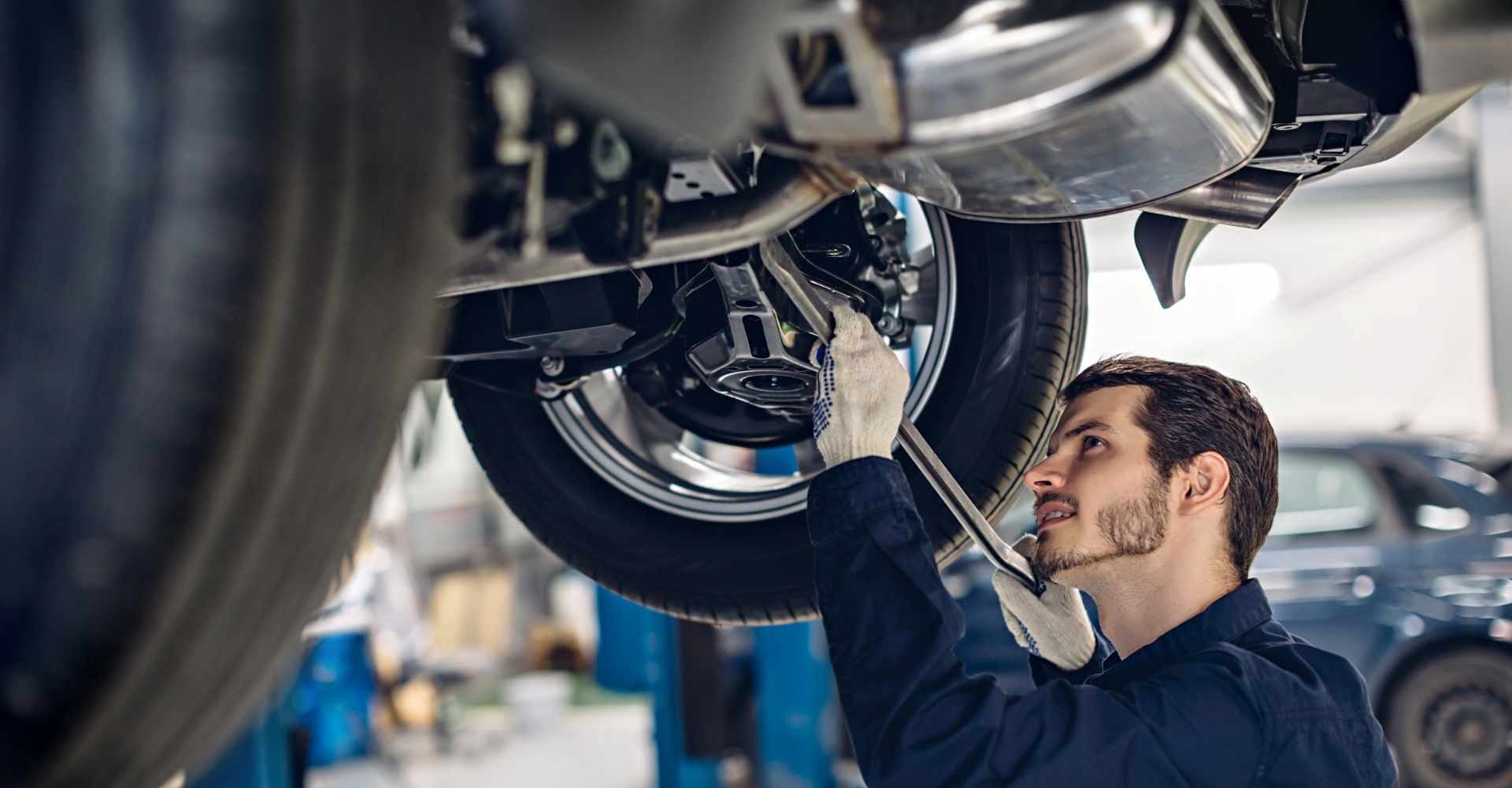
Many EV battery packs weigh 1,000 pounds or more. They sit beneath the floor and bolt directly to the body structure. Damage to the floor pan, rocker panels, or lower crossmembers near the pack calls for a close inspection of the enclosure, its mounting points, and its liquid cooling lines.
A coolant leak inside a damaged pack can cause internal shorts and, in rare cases, a fire days or weeks later. Automaker procedures spell out when a pack must be removed and tested.
Why EV Body Materials Change the Repair

To offset battery weight, automakers build EVs from aluminum, ultra-high-strength steel, and sometimes composites. These materials are lighter and stronger than mild steel, but they don’t tolerate the same repair methods.
Heat Is the Enemy
Heat-treated aluminum and hot-stamped boron steel get much of their strength from how they were made at the factory. Heating them with a torch, or overheating them during straightening, can permanently weaken the metal. A weakened part may look fine but fail in a future crash, so procedures specify which parts can be repaired and which must be replaced.
Joining Methods
EV structures are joined using only the methods the automaker specifies, which often include:
- Self-piercing rivets and rivet-bonding: cold-joining methods that fasten panels without heat
- Structural adhesives: OEM-approved bonding agents that add strength and seal joints
- Pulsed MIG or resistance spot welding: used only where the procedure calls for it, with equipment set to the manufacturer’s specs
Keeping Aluminum and Steel Apart
Steel grinding dust that settles on bare aluminum can cause galvanic corrosion, which eats away at the aluminum underneath fresh paint. Shops that repair aluminum keep its tools and work areas separate from steel work. Aluminum dust is also combustible, so it needs its own dust-collection setup.
Check out our frame and structural repair to learn more about our process.
Pre- and Post-Repair Scans: Finding Damage You Can’t See
Modern vehicles run on dozens of connected computer modules, and a collision can log fault codes that never turn on a warning light. Most automakers, including Ford, GM, Honda, Hyundai, and Nissan, have issued position statements calling for diagnostic scans as part of collision repair. A complete repair includes three stages:
- Pre-repair scan: Before teardown, a scan records every stored fault code so hidden electrical and sensor damage gets added to the repair plan.
- In-process programming: Some replacement parts, such as radar units, headlamps, and control modules, must be coded to your vehicle before they work correctly.
- Post-repair scan: After repairs, a final scan confirms no faults remain and every safety system is communicating normally.
Ask for scan reports with your final invoice. They’re your proof that the electronics were checked, not just the paint.
ADAS Calibration: Why a Bumper Repair Can Affect Your Brakes
Nearly every new vehicle sold today includes automatic emergency braking, and most EVs add lane-keeping, blind-spot monitoring, and adaptive cruise control. The National Highway Traffic Safety Administration explains how these Advanced Driver Assistance Systems (ADAS) work. They rely on cameras behind the windshield, radar units behind the bumper cover, and sensors along the sides of the car.
Small alignment errors add up fast. A radar unit aimed just 1 degree off will be about 5 feet off target at 300 feet, roughly the width of a car. That can mean braking for a car in the next lane, or missing the one stopped in yours.
How Calibration Works
Static calibration happens in the shop, while dynamic calibration happens on the road. Many vehicles need both after front or rear repairs. A typical static calibration follows the automaker’s sequence:
- Park the vehicle on a level surface that meets the automaker’s floor specifications.
- Measure and mark target positions from the vehicle’s centerline.
- Set the calibration target or reflector at the specified distance and height.
- Run the calibration routine through an OEM-compatible scan tool.
- Road-test to confirm the system correctly recognizes lanes and vehicles.
If your estimate includes bumper, windshield, or structural work but no calibration, ask why before you approve it.
What You Can Handle vs. When to Call a Pro

Some post-accident checks are safe for any owner. High-voltage, structural, and sensor work belongs with a trained technician.
Tasks Most Owners Can Do
- Photograph dashboard warnings: Capture alerts right after the accident, especially high-voltage or airbag messages, since some clear after a restart.
- Do a visual walk-around: Without touching damaged areas, look for fluid under the car, hanging shields, or scrapes on the underbody.
- Check your owner’s manual: Most EV manuals include a post-accident section explaining what the car’s warnings mean.
When to Call a Professional
- High-voltage work: Shutting down, inspecting, or replacing high-voltage parts requires OEM procedures, insulated tools, and protective gear.
- Underbody or frame damage: Only measurement against factory dimensions can confirm the structure is straight, and an EV’s battery is part of that structure.
- Paint and refinishing: Paint booths heat the whole vehicle, and automakers set temperature limits to protect the battery. Ask how your shop follows them, or read more about our auto painting process.
- Red flags requiring immediate professional attention: hissing, popping, smoke, a sweet chemical smell, fluid leaking near the battery area, or a high-voltage system warning. Don’t drive, push, or jump-start the car. Move away from it, call 911 if you see smoke, and request a flatbed tow
Common EV Collision Repair Mistakes to Avoid
1. Not Reviewing the Parts on Your Estimate
What people do wrong: Approving an estimate without checking whether bumper covers, grilles, and sensor brackets are original equipment (OEM) or alternative parts.
Why it’s a problem: Radar reads through the bumper cover. Automakers specify cover material, thickness, and paint thickness in sensor areas, and a part that doesn’t match can affect how the radar performs.
The right approach: Ask which parts on your estimate sit in front of sensors and whether they meet the automaker’s specifications. If you prefer OEM parts, raise it with your shop and insurer before repairs begin.
2. Assuming the Car Is Straight Because the Doors Close
What people do wrong: Believing that if the doors and hood line up, the structure underneath is fine.
Why it’s a problem: The battery pack bolts to the body and helps keep it rigid. A slightly twisted rocker or floor can stress the pack’s mounts and seals over time, letting moisture in.
The right approach: Ask whether the shop measured the structure against factory dimensions with an electronic measuring system, and request a copy of the printout.
3. Skipping the Paperwork at Pickup
What people do wrong: Picking up the car once it looks good without asking for documentation.
Why it’s a problem: Scans, calibrations, and battery checks are invisible. Without records, you can’t confirm they were done, and neither can a future shop or insurer.
The right approach: Request pre- and post-scan reports, calibration records, and frame measurements with your final invoice.
Conclusion
Electric vehicle collision repair comes down to three things: shutting down high voltage safely, repairing the structure exactly as the automaker specifies, and verifying every sensor and module afterward. A repair that skips any of these can look finished and still leave your car less safe than before.
We’ve been repairing vehicles in Ephrata since 1975. Barry’s Paint Shop technicians are I-CAR Gold Class Professionals, and the shop is a Certified Collision Repair Facility for Ford, FCA, GM, Honda/Acura, Hyundai, Nissan, and Infiniti, brands that build many of the EVs and hybrids on Lancaster County roads. Every body repair carries a lifetime warranty, and sister shop Lititz Collision shares the same standards.
If your EV or hybrid has been in an accident, call 717-733-6900 or visit us at 33 Long Ave. in Ephrata. Office hours are Monday through Friday, 8 a.m. to 5 p.m., and towing is dispatched 24/7.
Serving Ephrata, Stevens, Denver, Adamstown, Brownstown, Lititz, New Holland, Bowmansville, Reinholds, Reading, Terre Hill, Wernersville, Martindale, Reamstown, and the surrounding Lancaster and Berks County area.
Frequently Asked Questions
Can any auto body shop repair an electric vehicle?
Not every shop is equipped to. EV repairs require trained technicians, insulated tools and protective gear, OEM repair procedures, and scan tools that can communicate with the vehicle’s modules. Some automakers also restrict structural parts to certified facilities, so ask about training and certification for your vehicle’s brand before authorizing work.
Does an EV battery need to be replaced after an accident?
Usually not. Replacement is typically required only when the battery enclosure is cracked, punctured, or deformed beyond the automaker’s limits, or when testing shows internal damage. A qualified shop inspects the enclosure and mounts, reviews stored fault codes, and follows the automaker’s procedure to decide whether the pack can stay.
Why do electric car collision repairs take longer?
EV repairs add steps gas cars don’t need: high-voltage shutdown and restart, battery inspections, scans and module programming, and ADAS calibrations that may include road testing. Parts for some newer EV models also have longer lead times. Ask for an estimated timeline up front, and ask about rental options while your car is in the shop.
Will collision repairs void my EV battery warranty?
Collision repairs don’t automatically void your battery warranty, but damage caused by the accident itself generally isn’t a warranty item. Repairs that follow the automaker’s procedures with approved parts help protect your coverage. Keep your scan reports, calibration records, and invoice in case a warranty question comes up later.
What is the difference between static and dynamic ADAS calibration?
Static calibration is done in the shop using targets placed at precise distances from the vehicle, while dynamic calibration is done by driving at set speeds with a scan tool connected. The automaker determines which method each sensor needs, and many vehicles require both after bumper or windshield work.
Is it safe to paint an electric car in a paint booth?
Yes, as long as the shop follows the automaker’s temperature limits. Paint booths heat the vehicle to cure the finish, and too much heat can stress battery cells. Automakers specify maximum booth temperatures and times for vehicles with high-voltage batteries, and some shops use infrared lamps to cure only the repaired panels.
Sources
- SAE International — J2990 Hybrid and EV First and Second Responder Recommended Practice: post-crash handling of electrified vehicles.
- National Highway Traffic Safety Administration (NHTSA) — Driver Assistance Technologies: how ADAS features work.