Read Time: 8 min
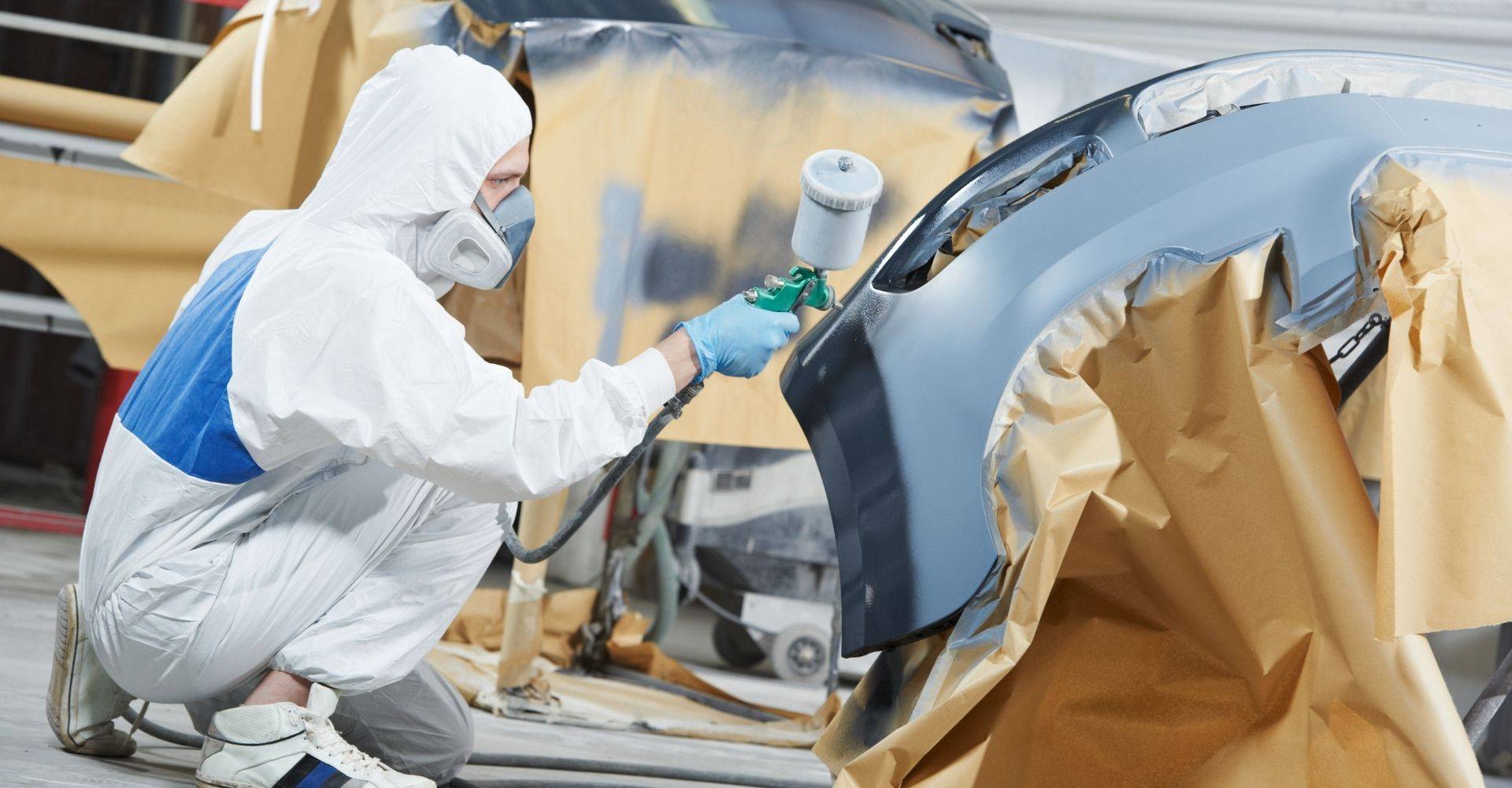
When your car comes back from a repair shop with a paint patch that doesn’t quite match the rest of the panel, you know immediately — and so does everyone else. Automotive color matching is far more complex than selecting a color code from a sticker inside your door jamb. Modern vehicles use multi-layer paint systems, and even the “correct” factory color can drift significantly over time due to UV exposure, temperature cycles, and batch variation. Understanding how professional shops use technology to overcome these challenges is the first step to knowing what a truly perfect factory finish requires.
Key Takeaways:
- A vehicle’s OEM color code is a starting point, not a guarantee — paint fades and shifts by up to 3–5 Delta E units over five years.
- Spectrophotometers measure light across 31 spectral bands to identify your car’s actual current color, not just its original formula.
- Multi-stage finishes (metallic, pearl, tri-coat) require blending zones of 12–18 inches beyond the repair area for a seamless result.
- DIY color matching kits are suitable only for minor touch-ups on single-stage solid colors.
- Barry’s Paint Shop uses an advanced spectrophotometer system and a proprietary mixing database to achieve factory-grade results in Lancaster PA and the Ephrata area.
How Does Automotive Paint Color Matching Technology Work?
What Role Do Spectrophotometers Play in Color Matching?
A spectrophotometer is the cornerstone instrument of professional automotive color matching. Unlike the human eye, which perceives color differently depending on lighting conditions, fatigue, and individual variation, a spectrophotometer measures the precise wavelengths of light reflected from a painted surface across 31 spectral bands between 400 nm and 700 nm. This produces a numerical color profile called a spectral reflectance curve, which is unique to that specific paint sample.
When a technician scans your vehicle’s undamaged panel, the device captures the exact color as it exists today — not as it left the factory years ago. That data is then cross-referenced against a digital color-matching database containing thousands of OEM formulas and real-world variant adjustments. The result is a custom-mixed formula calibrated to your car’s actual current color, not a generic factory code.
How Does Digital Color Matching Software Ensure Precision?
Modern color-matching software does more than look up a formula. It applies variant correction algorithms that account for known drift patterns in specific paint codes, adjusting pigment ratios to compensate for how a particular color ages on a particular substrate. The software also flags metamerism risk — situations where two paint samples appear identical under one light source (e.g., fluorescent shop lighting) but diverge under another (e.g., natural daylight). A professional technician reviews these flags and makes manual adjustments before mixing begins.
The mixing process itself is controlled by gravimetric dispensing systems that measure pigment additions to within 0.1 grams. This level of precision is simply not achievable with off-the-shelf aerosol cans or consumer touch-up kits.
Why Color Codes Alone Don’t Guarantee a Perfect Match
How Age, Fading, and Environmental Factors Affect Paint Color
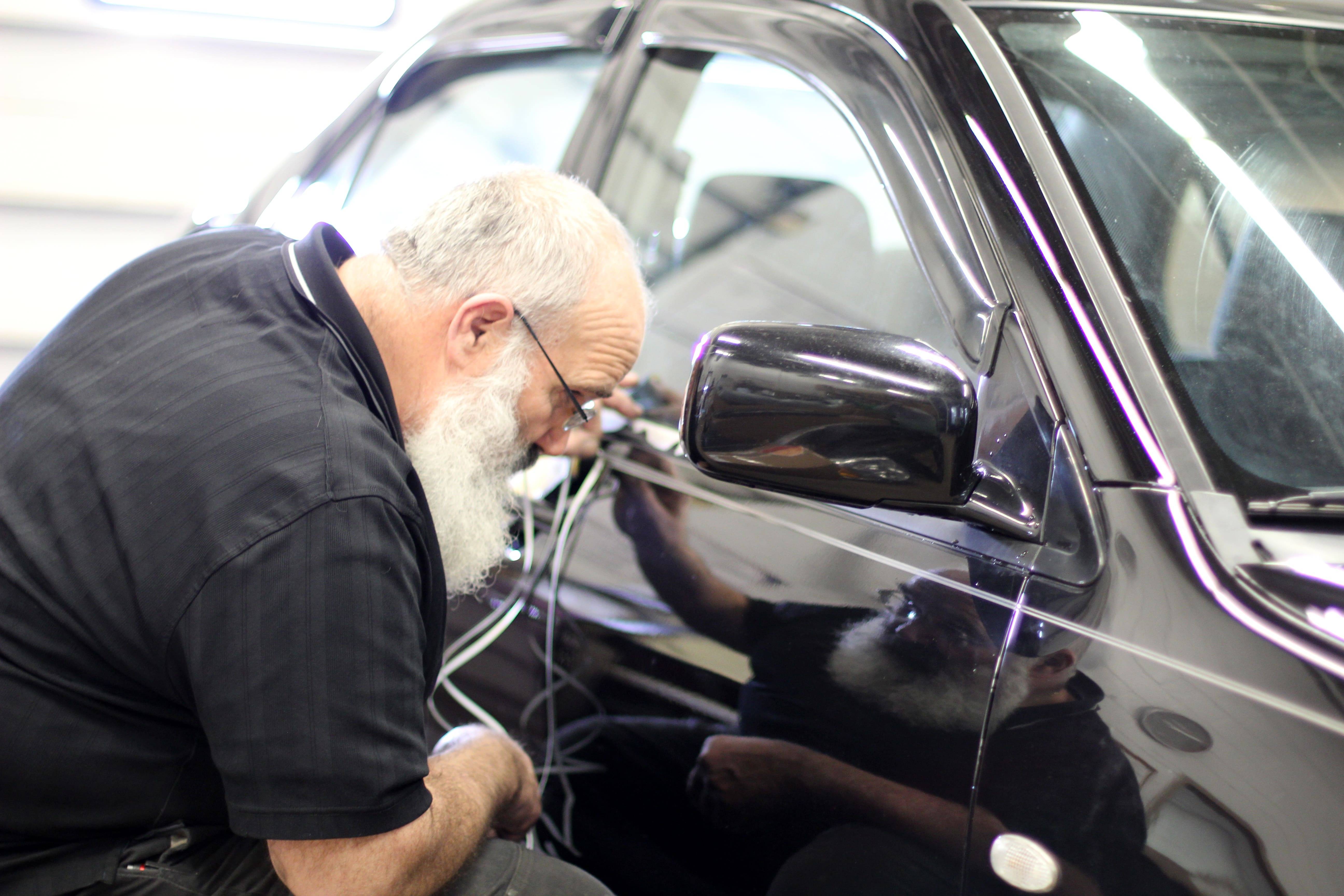
Every vehicle leaves the factory with a specific OEM color code — a formula that was accurate on the day it was applied. But paint is not static. UV radiation, heat cycling, acid rain, and oxidation all alter the molecular structure of pigments over time. Research in automotive refinishing shows that color can drift by 3–5 Delta E units over a five-year period under normal outdoor exposure. A Delta E of just 1.0 is perceptible to a trained eye; a drift of 3–5 is visible to anyone standing next to the car.
This means that applying a fresh, factory-formula mix directly to an aged panel will almost always produce a visible mismatch — the new paint will appear noticeably brighter or more saturated than the surrounding surface. Professional shops compensate by scanning the adjacent undamaged panel and adjusting the formula to match the current, weathered state of the paint.
Understanding Multi-Stage Metallic and Pearl Finishes
Single-stage solid colors are the most forgiving to match. Metallic and pearl finishes are significantly more complex. A standard basecoat/clearcoat system has two layers; a tri-coat pearl finish has three — a base color layer, a translucent pearl mid-coat, and a clearcoat. Each layer interacts with light differently, and the visual effect changes depending on the viewing angle, a property called flop or travel.
Metallic paints contain aluminum flake particles that must be oriented consistently during application. If spray pressure, gun distance, or temperature varies even slightly, the flake orientation changes — and the panel will look lighter or darker than its neighbor at certain angles. For these finishes, technicians must extend the blending zone 12–18 inches beyond the physical repair area, feathering the new paint into the surrounding surface so the transition is invisible.
What You Can Handle vs. When to Call a Pro
Not every paint imperfection requires a professional repair. Here is a clear breakdown of what falls within DIY territory and what demands expert intervention.
You can handle:
- Stone chips smaller than 3 mm on solid, single-stage colors using a manufacturer touch-up pen
- Surface scratches that have not penetrated the clearcoat (test: if your fingernail does not catch, it is clearcoat-only)
- Light swirl marks are removable with a dual-action polisher and cutting compound
Call a professional when:
- The damage has broken through to the primer or bare metal — exposed metal will rust within days in Pennsylvania’s climate
- The affected area is larger than a quarter coin — larger repairs require blending, which requires professional equipment
- Your vehicle has a metallic, pearl, tri-coat, or matte finish — these cannot be matched or blended without a spectrophotometer and professional spray equipment
- The damage is on a visible body panel such as a hood, door, or fender, where a mismatch will be immediately obvious
- You need the repair to hold up to Pennsylvania winters — road salt and freeze-thaw cycles will lift improperly applied touch-up paint within one season
When collision damage reaches the paint, our sister shop Lititz Collision & Repair works with the same advanced color-matching standards — ensuring structural repairs and paint finish are handled with equal precision.
Common Mistakes to Avoid in Automotive Color Matching
Even well-intentioned DIY attempts and inexperienced shops make the same errors repeatedly. Avoiding these mistakes is the difference between a repair that lasts and one that fails within a season:
- Using the door jamb color code without scanning the panel. The code gives you the original formula, not the current color. On any vehicle older than two years, always scan the adjacent panel first.
- Skipping the variant check. Many OEM codes have 10–30 documented variants. Applying the base formula without checking variants is a coin flip.
- Applying new paint in direct sunlight or cold temperatures. Ideal application temperature is 65–75°F; below 50°F, solvents do not flash properly and adhesion fails.
- Not blending metallic or pearl repairs. Stopping paint application at the edge of the repair panel creates a hard line that is visible under any directional light.
- Rushing the clearcoat. Clearcoat applied before the basecoat has fully flashed — typically 15–20 minutes between coats — traps solvents and causes bubbling or hazing within weeks.
- Using mismatched clearcoat chemistry. Mixing waterborne basecoat with solvent-borne clearcoat, or vice versa, causes adhesion failure. All layers must be chemically compatible.
Why Barry’s Advanced Color Matching System Stands Apart in Lancaster PA
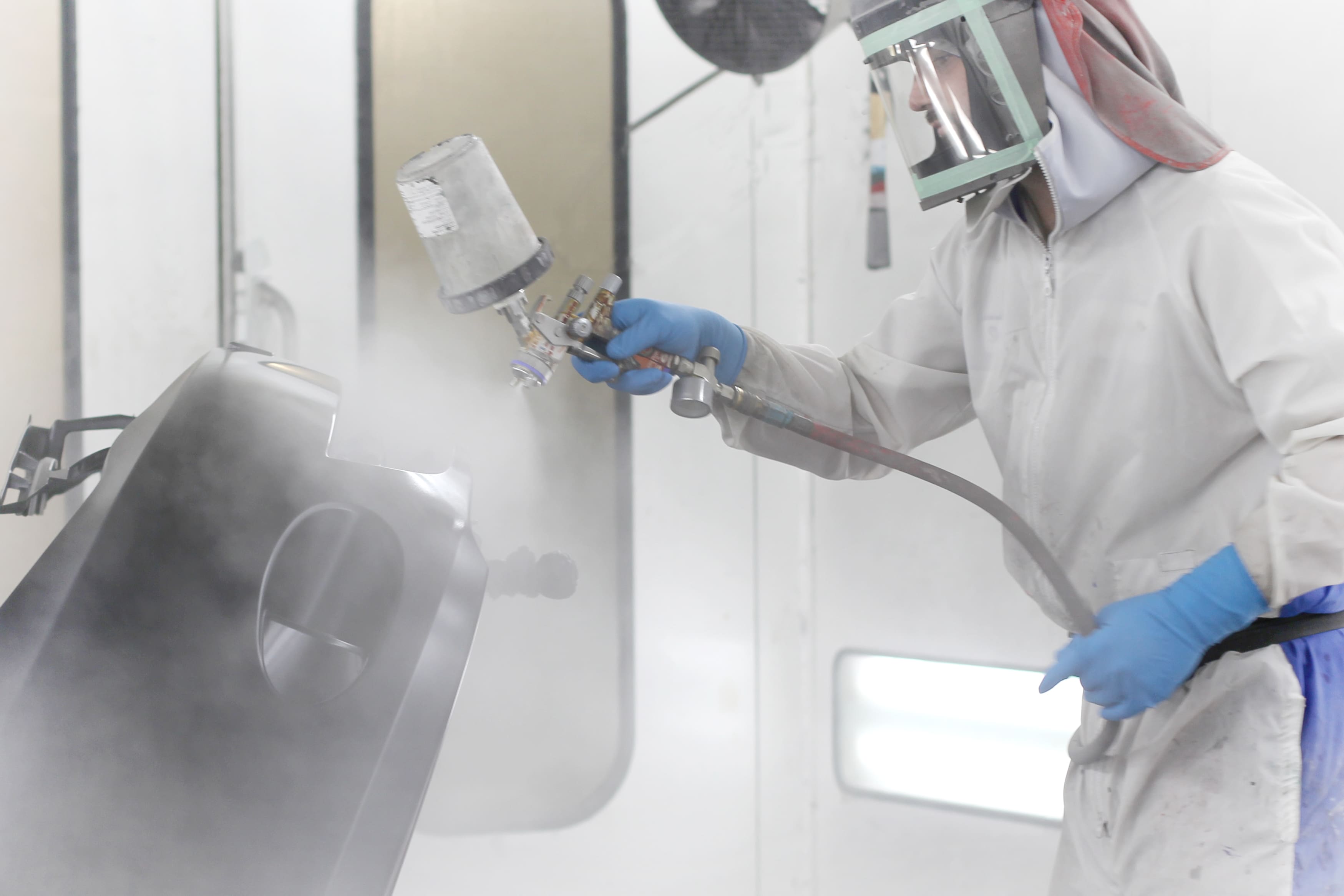
At Barry’s Paint Shop, auto paint color matching in Lancaster PA is not a guesswork process. Every repair begins with a full spectrophotometric scan of the adjacent undamaged panel — not a color code lookup. The scan data is processed through a proprietary mixing database that incorporates real-world variant adjustments specific to the makes and models most common in Lancaster County and the Ephrata area.
Barry’s technicians are trained in multi-stage finish application, including tri-coat pearl and high-metallic formulas that require precise flake orientation and extended blending zones. Every mixed batch is test-sprayed on a spray-out card and evaluated under both fluorescent and daylight-spectrum lighting before it touches your vehicle. This two-light verification step catches metamerism issues that would otherwise only become visible once the car is outside.
For customers seeking automotive color match in Ephrata and across Lancaster County, this means your factory paint match in Pennsylvania is achieved through measurement and process — not approximation. Barry’s commitment to precision at every step is what separates a repair that blends invisibly from one that draws the eye every time you walk past your car.
Concerned your car’s paint won’t match? Let us show you how we do it.
Schedule a color match consultation at Barry’s Paint Shop →
Conclusion: Achieving a Factory-Perfect Finish Starts with the Right Technology
Color matching is one of the most technically demanding disciplines in automotive refinishing. The gap between a visible mismatch and an invisible repair comes down to three things: accurate measurement with a spectrophotometer, formula adjustment for real-world color drift, and skilled application with proper blending technique. A color code alone cannot bridge that gap — and neither can a consumer touch-up kit on anything more complex than a minor chip on a solid-color vehicle.
If your vehicle has a metallic, pearl, or tri-coat finish, or if the repair area is larger than a coin, the investment in professional color matching pays for itself in a result that holds up to Pennsylvania’s climate and looks right under every light. Barry’s Paint Shop brings the same technology and process discipline to every job, whether it is a single door panel or a full respray. You deserve a finish that looks like it never happened.
Frequently Asked Questions
How accurate is modern automotive color matching technology?
Modern spectrophotometric systems can achieve color matches within 0.5–1.0 Delta E — a difference imperceptible to the human eye under normal viewing conditions. Visual matching by eye, by contrast, typically produces results in the 2–5 Delta E range, which is visible in side-by-side comparison under natural light.
Why does my car’s paint look different even with the correct color code?
Paint fades and shifts due to UV exposure, oxidation, and environmental factors. A factory color code reflects the original formula, not the current state of your paint. On vehicles more than two to three years old, the original formula will almost always appear brighter or more saturated than the aged surrounding paint. A spectrophotometric scan of the existing panel is required to produce a matching formula.
How long does a professional color match and paint repair take?
A single-panel repair with color matching typically takes 1–2 business days at Barry’s Paint Shop, depending on the finish type and extent of blending required. Multi-panel repairs or full resprays require additional time for proper cure between coats. You will receive a specific timeline estimate at your consultation.
Can I match metallic or pearl paint at home?
In most cases, no. Metallic and pearl finishes require a spectrophotometer to identify the correct variant, professional spray equipment to control flake orientation, and blending technique to feather the repair into adjacent panels. Consumer aerosol cans cannot replicate these conditions. Attempting a DIY repair on a metallic or pearl finish typically results in a visible mismatch that is more expensive to correct than the original damage.
Does Barry’s Paint Shop serve customers in Ephrata and surrounding Lancaster County areas?
Yes. Barry’s Paint Shop provides automotive color match services throughout Lancaster PA, Ephrata, Lititz, Manheim, and surrounding Lancaster County communities. Contact us to schedule a consultation or drop-in color match assessment.
Sources
- Berns, R.S. (2019). Billmeyer and Saltzman’s Principles of Color Technology (4th ed.). Wiley. https://www.wiley.com/en-us/Billmeyer+and+Saltzman%27s+Principles+of+Color+Technology%2C+4th+Edition-p-9781119366683 — Spectral reflectance measurement methodology and Delta E tolerances.
PPG Industries. Color Matching Guide for Automotive Refinish. PPG Refinish Technical Documentation. https://www.ppgrefinish.com — Variant correction and multi-stage blending procedures.